Coloring with toddlers: what to expect by age and which pages fit
Written by the Amy Color Club editors with the help of AI and checked by us.
What toddlers often do with a crayon at different ages, and which coloring pages suit them. Large shapes, thick crayons and short moments together.
A toddler who holds a crayon usually starts by scribbling. That is not a mistake. It is the first step toward coloring. If you know roughly what to expect at each age, you can choose the right page and enjoy the scribbles instead of correcting them.
The pattern below is what parents often see. Every child is different, and the order can vary. Use it as a rough guide, not a yardstick.
What you often see
Around two years old, a child usually scribbles with the whole hand. The crayon moves back and forth, and the lines are big and loose. They do not stay inside the lines yet. A page with one large figure and wide areas works well here, so the child can see the color land somewhere.
Around three, many children hold the crayon more between thumb and finger. Shapes start to be recognizable, and the child may choose one color for part of the page. A page with a clear outline and few small details fits this stage.
Around four, children often want to choose the page themselves, and they can keep to the lines a little better. Coloring outside the lines is still normal at this age. A simple pattern can hold their attention for longer.
Pick pages with large areas
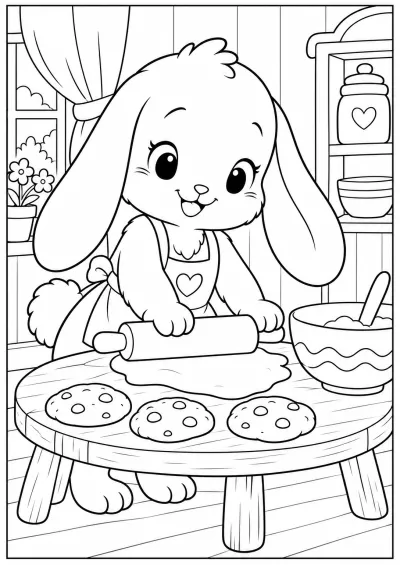
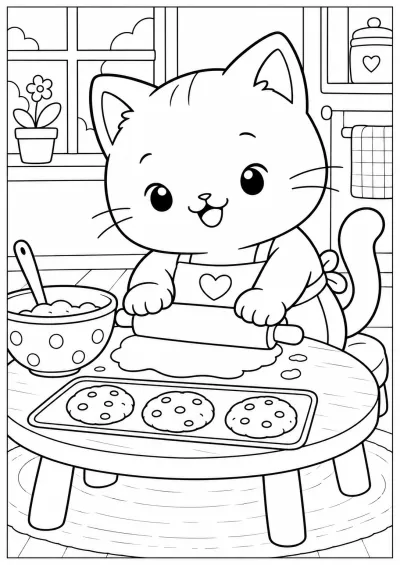
For toddlers, pages with large areas work best. The bunny that bakes cookies and the kitten baking cookies are good examples. The shapes are clear and there is not much small detail.
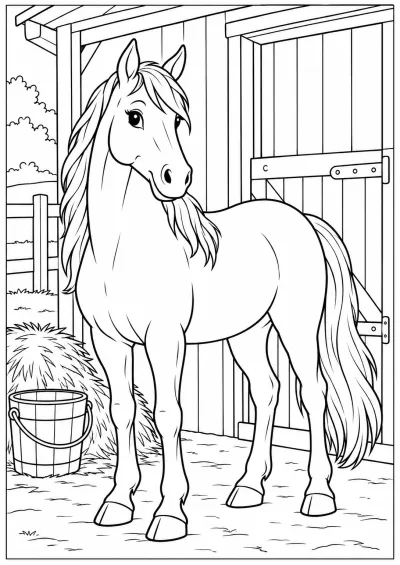
A horse by the stable is another simple choice. A horse has big areas that are easy to fill.
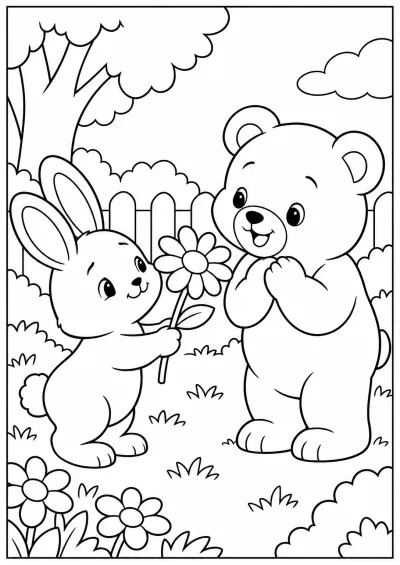
For a gentle picture to talk about, try a flower for you. It works well when you color together and name the colors out loud.
The easy coloring pages list shows the pages with the largest areas in one place.
Crayons that fit small hands
Thick crayons and short markers are easier to hold than thin pencils. A triangular pencil also helps the grip. Thin pencils snap easily and can frustrate a small child, so keep a few colors ready rather than the whole box.
Paper of 80 grams is fine for crayons. If your child presses hard, a slightly thicker sheet is more forgiving and does not tear as easily.
Keep the moments short
A toddler does not color for long stretches. Five to ten minutes is often enough, and that is fine. Build a routine: the same place, the same time, and a clear moment to put the crayons away. Stop before the child stops, so the activity stays fun.
Let the child choose the page from two or three options. Letting them choose matters at this age.
Color together
You do not need to correct the colors. If your child colors a dog green, ask why. Maybe it is a green dog. Questions like this give a child a chance to talk about what they are doing.
Keep the finished pages in a folder. After a few months, you can look back together and see how the lines have changed. It shows progress without pressure.
To finish
Coloring with a toddler is about time together and a crayon in the hand. Choose a large page, a few thick crayons and a short moment, and let the child lead. You can find more pages with large areas in the overview of all coloring pages.